
Poor Sleep and Mental Health: What's the Connection?
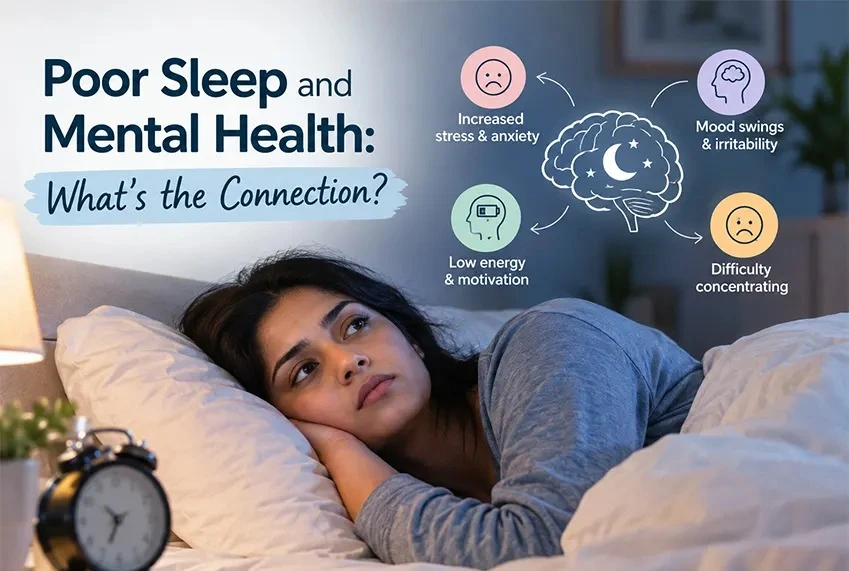
Sleep is often the first thing we sacrifice when life gets busy — a late-night work deadline, endless scrolling, or simply lying awake with racing thoughts. Yet sleep is not a luxury; it is one of the most powerful tools our brain uses to regulate mood, process emotions, and maintain overall mental wellbeing. In our clinical practice, we frequently see patients whose anxiety, depression, or mood instability is closely tied to poor sleep patterns — and addressing sleep is often a crucial first step in their recovery.
As Dr. Pranshu Agarwal often explains to patients, sleep is not just downtime for the body — it's active repair time for the mind. In this blog, we'll explore the deep, two-way relationship between sleep and mental health, the science behind it, and practical steps you can take to protect both.
The Bidirectional Relationship Between Sleep and Mental Health
For a long time, poor sleep was viewed simply as a symptom of mental illness — something that happened because a person was depressed or anxious. Today, research paints a more complex picture: sleep and mental health influence each other in both directions.
- Poor sleep can trigger or worsen mental health conditions. Chronic sleep deprivation disrupts the brain's ability to regulate emotions, making people more vulnerable to anxiety, depression, and even psychotic symptoms in severe cases.
- Mental health conditions can disrupt sleep. Anxiety often causes racing thoughts and hyperarousal that make falling asleep difficult. Depression can cause both insomnia and hypersomnia (excessive sleeping). Trauma-related disorders like PTSD are frequently associated with nightmares and fragmented sleep.
This means that sleep problems and mental health struggles can create a self-reinforcing cycle: poor sleep worsens mood and anxiety, and worsening mood and anxiety further disrupt sleep. Breaking this cycle usually requires addressing both sides together, which is why mental health professionals increasingly treat sleep as a core part of psychiatric care rather than an afterthought.
What Happens in the Brain During Sleep?
To understand why sleep matters so much for mental health, it helps to know what actually happens while we sleep. Sleep isn't a single, uniform state — it cycles through several stages, each serving a different purpose:
- Light sleep (Stages 1 and 2): The transition into sleep, where the body begins to relax and brain activity slows.
- Deep sleep (Stage 3, slow-wave sleep): Critical for physical restoration, immune function, and memory consolidation. This is the most physically restorative stage of sleep.
- REM sleep (Rapid Eye Movement): The stage most closely linked to emotional processing and dreaming. During REM sleep, the brain works through emotional experiences from the day, essentially helping to "file away" difficult emotions so they feel less intense afterward.
When sleep is cut short or repeatedly disrupted, the brain doesn't get enough time in deep sleep or REM sleep. This means emotional experiences don't get processed properly, stress hormones aren't regulated, and the brain's threat-detection systems (like the amygdala) become more reactive. Over time, this creates a brain that is more anxious, more emotionally reactive, and less resilient to stress — even in people who didn't previously struggle with mental health issues.
The Science: How Sleep Deprivation Affects Mood and Cognition
Several biological mechanisms explain why poor sleep takes such a toll on mental health:
1. Amygdala Hyperactivity
Studies using brain imaging have shown that sleep-deprived individuals have a more reactive amygdala — the brain's fear and emotion center — when exposed to negative stimuli. At the same time, the prefrontal cortex, which normally helps regulate and calm the amygdala, becomes less effective. The result is heightened emotional reactivity, irritability, and difficulty managing stress.
2. Disrupted Neurotransmitter Balance
Sleep plays a key role in regulating neurotransmitters like serotonin, dopamine, and norepinephrine — all of which are deeply involved in mood regulation. Chronic sleep loss can throw these systems out of balance, contributing to symptoms of depression and anxiety.
3. Elevated Cortisol Levels
Poor sleep is associated with increased levels of cortisol, the body's primary stress hormone. Elevated cortisol over time can worsen anxiety, disrupt appetite and energy levels, and even affect memory and concentration.
4. Impaired Memory and Decision-Making
Sleep deprivation affects the hippocampus, impairing memory consolidation and clear thinking. This can make it harder to manage daily stressors effectively, which in turn adds to feelings of being overwhelmed — a common precursor to anxiety and depressive episodes.
5. Reduced Emotional Resilience
Well-rested individuals are generally better able to interpret ambiguous situations neutrally or positively. Sleep-deprived individuals, on the other hand, tend to interpret neutral events more negatively — a cognitive bias that can fuel anxious or depressive thought patterns.
Common Mental Health Conditions Linked to Sleep Problems
Depression
Insomnia is present in a large majority of people diagnosed with depression, and difficulty sleeping is often one of the earliest warning signs of a depressive episode. Interestingly, research also shows that treating insomnia can significantly improve depressive symptoms, sometimes even before other treatments take full effect.
Anxiety Disorders
Anxiety and sleep problems often go hand-in-hand. Racing thoughts, muscle tension, and a heightened state of alertness can make it difficult to fall or stay asleep. Over time, the resulting sleep deprivation increases baseline anxiety levels, creating a vicious cycle.
Bipolar Disorder
Sleep disturbances are closely tied to mood episodes in bipolar disorder. Reduced need for sleep is often an early sign of a manic episode, while oversleeping or insomnia can accompany depressive phases. For many patients, maintaining a consistent sleep schedule is a key part of long-term mood stability.
PTSD and Trauma-Related Disorders
Nightmares, hypervigilance, and difficulty staying asleep are common in people with post-traumatic stress disorder. Because REM sleep plays such an important role in emotional processing, disrupted REM sleep in trauma survivors may interfere with the brain's natural ability to "heal" from distressing memories.
ADHD
Many people with ADHD also struggle with delayed sleep onset, restless sleep, or an irregular sleep-wake cycle, which can worsen attention difficulties, emotional regulation, and impulsivity during the day.
Signs Your Sleep Might Be Affecting Your Mental Health
It isn't always obvious that sleep is the root cause of emotional struggles. Some signs to watch for include:
- Persistent irritability, low mood, or anxiety that seems to worsen after poor sleep
- Difficulty concentrating or making decisions
- Increased sensitivity to stress or minor setbacks
- Relying on caffeine or stimulants to get through the day
- Waking up frequently during the night or feeling unrefreshed even after 7–8 hours
- Racing thoughts at bedtime that make it hard to "switch off"
If these patterns sound familiar, it may be worth exploring whether a sleep issue is contributing to — or even driving — your mental health symptoms.
Practical Steps to Improve Sleep and Support Mental Health
The good news is that sleep is highly responsive to lifestyle and behavioral changes. Here are some evidence-based strategies:
1. Maintain a Consistent Sleep Schedule
Going to bed and waking up at the same time every day — even on weekends — helps regulate your body's internal clock (circadian rhythm), making it easier to fall asleep and wake up naturally.
2. Create a Wind-Down Routine
Give your brain a signal that it's time to relax. This could include reading, gentle stretching, journaling, or practicing deep breathing for 20–30 minutes before bed.
3. Limit Screen Time Before Bed
The blue light emitted by phones, tablets, and laptops can suppress melatonin production, delaying sleep onset. Try to avoid screens for at least 30–60 minutes before bedtime.
4. Watch Your Caffeine and Alcohol Intake
Caffeine can stay in your system for 6–8 hours, while alcohol — though it may initially make you drowsy — disrupts deep and REM sleep later in the night.
5. Get Natural Light Exposure During the Day
Exposure to natural light, especially in the morning, helps reinforce a healthy sleep-wake cycle and can improve mood as well.
6. Manage Racing Thoughts
Techniques like journaling worries before bed, practicing mindfulness, or using progressive muscle relaxation can help calm an overactive mind that resists sleep.
7. Exercise Regularly — But Not Too Close to Bedtime
Regular physical activity improves both sleep quality and mood, but vigorous exercise right before bed can be stimulating for some people.
8. Be Mindful of Naps
Long or late-afternoon naps can interfere with nighttime sleep. If you need to nap, keep it short (20–30 minutes) and earlier in the day.
When to Seek Professional Help
While lifestyle changes can significantly improve sleep for many people, persistent sleep problems — especially when paired with low mood, anxiety, or difficulty functioning day-to-day — often benefit from professional support. This is particularly important if:
- Sleep problems have lasted more than a few weeks
- You're relying on alcohol, sleep aids, or other substances to fall asleep
- You're experiencing significant anxiety, low mood, or hopelessness alongside poor sleep
- Sleep issues are affecting your work, relationships, or daily functioning
- You suspect an underlying condition like depression, anxiety disorder, or a sleep disorder such as insomnia or sleep apnea
A mental health professional can help identify whether sleep is a symptom, a cause, or both — and design a treatment plan tailored to your specific situation. This might include therapy approaches like Cognitive Behavioral Therapy for Insomnia (CBT-I), which is considered one of the most effective non-medication treatments for chronic insomnia, alongside addressing any underlying mental health conditions.
Final Thoughts
Sleep and mental health are deeply intertwined — each shaping and reinforcing the other. Poor sleep isn't just an inconvenience; it can be both a warning sign and a driver of deeper mental health struggles. The encouraging part is that improving sleep is one of the most accessible and effective ways to support emotional wellbeing, and small, consistent changes can make a meaningful difference over time.
If you've been struggling with sleep issues alongside anxiety, low mood, or other emotional challenges, know that you don't have to navigate it alone. At Happy Minds Psychiatry Clinic, our team understands the intricate link between sleep and mental health and can help you find the root cause of what's keeping you up at night — and offer the right support to help you feel rested, balanced, and emotionally well again.
Better sleep isn't just about feeling less tired — it's about protecting your mind's ability to heal, cope, and thrive.
Frequently Asked Questions (FAQs)
1. Can poor sleep affect mental health?
Yes. Poor sleep can worsen anxiety, depression, mood changes, stress, and emotional regulation.
2. Can anxiety cause sleep problems?
Yes. Racing thoughts, muscle tension, and increased alertness can make it difficult to fall or stay asleep.
3. What are the signs that poor sleep is affecting mental health?
Irritability, low mood, anxiety, difficulty concentrating, increased sensitivity to stress, and waking up feeling unrefreshed can be warning signs.
4. How can I improve my sleep naturally?
Maintain a consistent sleep schedule, create a relaxing bedtime routine, limit screen time before bed, manage racing thoughts, and get regular exercise.
5. When should I seek professional help for sleep problems?
Consider professional support if sleep problems continue for more than a few weeks, affect daily functioning, or occur alongside significant anxiety, low mood, or hopelessness.